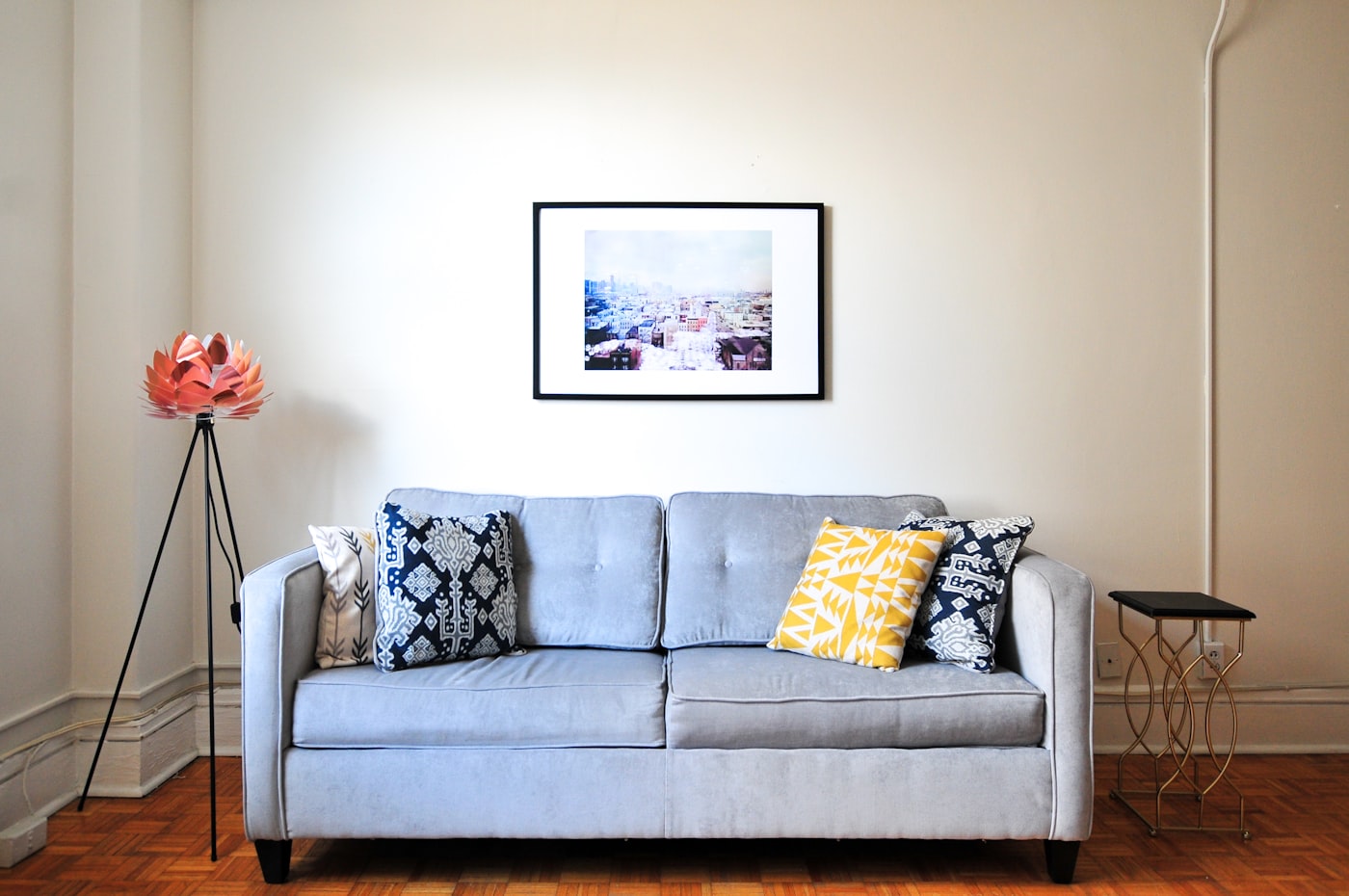
The domestic architecture of most couples' homes is a physical argument for togetherness. Everything shared: the bed, the bookshelf, the bathroom counter, the living room that belongs, by default, to both of you simultaneously. The separate space — the home office, the reading nook, the spare room — is an afterthought, if it exists at all, in a housing market that rarely makes it affordable to maintain rooms that are not serving double duty.
But physical spaces encode assumptions, and the assumption encoded in the typical shared home is one worth examining: that two people in a committed partnership have identical spatial needs, that togetherness is the default state and separateness the exception, that a room belonging to one partner rather than both is a luxury rather than a necessity.
The Mythology of Togetherness
The cultural mythology of the shared bed is particularly persistent. The double bed — king, queen, the whole graduated scale of togetherness — is the central piece of furniture in the marital mythology. It is where the couple sleeps, makes love, reads, argues, comforts, and recovers. To sleep separately is, in the folk mythology of partnership, to admit to some failure of connection — a concession, a step backward, the first move in the direction of the guest room.
This mythology is harmful in a specific way. It conflates the symbolic value of the shared bed with its actual functionality, and it makes it difficult for couples to have a clear-eyed conversation about whether the shared bed is actually serving them. Many couples who sleep badly — separately waking the other, disturbing each other's rhythms, compromising each other's sleep quality — continue to share a bed because the alternative feels like an admission of defeat.
A couple who sleeps well, separately, is not a couple with less intimacy. They are a couple who has chosen sleep — the most fundamental restorative act — over the performance of togetherness. This is, we would argue, a form of love.
The Sleep Question
The science is unambiguous. Sleep disruption compounds over time, producing measurable deterioration in mood, cognitive function, emotional regulation, and immune function. A partner who snores, or runs hot, or keeps different hours, or requires a different firmness of mattress, or has restless sleep — that partner is a chronic disruptor of the other's sleep quality. And poor sleep is, in turn, one of the most reliable predictors of relationship conflict. Matthew Walker's research on sleep and emotion regulation found that sleep-deprived individuals showed significantly higher reactivity to interpersonal provocation and significantly lower empathy.
"Sleep divorce" — the somewhat unfortunate phrase that has come to describe the practice of sleeping in separate beds or rooms — is, beneath the provocative name, simply a pragmatic decision to prioritize each partner's sleep quality. The couples who practice it often report not less intimacy but more: the bed becomes a chosen space rather than a default one, visits become intentional, and the exhausted resentment of chronic poor sleep is removed from the emotional atmosphere of the relationship.
The logistics can be arranged in whatever way fits the particular household. Same room, different beds. Different rooms, with open doors. A primary sleeping arrangement and a secondary one available when needed. The structure matters less than the clarity of the conversation — the agreement that sleep quality is a legitimate priority, that caring for your own restoration is caring for the relationship, that the shared bed is a choice and not a commandment.
A Room of One's Own
Virginia Woolf's argument, in 1929, was that a woman requires a room of her own and an independent income to write. The argument has been extended, rightly, beyond writing and beyond women: every person, to think, to recover, to maintain an interior life, requires some physical space that belongs to them alone. Not a vast space. Not necessarily a full room, in circumstances where that is impossible. But some space — a corner, a chair, a desk — that is theirs, that is not shared, that they have not had to negotiate.
The value of a private sanctuary in a shared home is not primarily about storage or productivity. It is about the quality of solitude that only a dedicated space can produce. The living room, even when your partner is absent, is a shared space — it carries their presence in its objects, its arrangements, its implicit social rules. Your own room, by contrast, can be arranged entirely according to your own aesthetic and functional preferences. It can be warm when you want it warm and cold when you want it cold. It can have the specific chaos or the specific order that restores you.
The private room is not a retreat from the relationship. It is the place you go to become, again, the person who is interesting enough to come back from it.
Separate Shelves
The shared bookshelf is a microcosm of the question this essay is asking. Many couples have a single shared bookshelf — their books mixed together, the library of two people presented as the library of one unit. There is something appealing about this. It suggests integration, a shared intellectual life, the merging of two reading histories.
But there is also something lost. The bookshelf is a kind of autobiography — a record of what you have read, what has mattered to you, what you return to. When it is merged with another person's autobiography, both get diluted. The visitor who wants to understand you through your books cannot, because your books are entangled with your partner's. And you yourself may lose track of the thread — which books are yours, which are theirs, what your reading history actually looks like as a distinct line.
Separate shelves — whether in separate rooms or simply clearly demarcated sections — preserve that thread. They also, unexpectedly, create more conversation: when a partner's shelf is visibly theirs, it becomes a subject of genuine curiosity. You can look at what they have read and ask about it, rather than absorbing it as background.
Five Design Principles for Shared Space
1. Name the shared and the separate. Every couple benefits from an explicit conversation about which spaces in the home are shared, which belong primarily to one partner, and which can flex depending on need. This conversation, taken out of the realm of implicit assumption, prevents the accumulated resentments of space that is always available to one partner and never reliably available to the other.
2. Design for your actual selves, not your aspirational selves. Homes often reflect the couple people imagine themselves to be rather than the couple they are. If one partner is an introvert who needs daily solitude and the home has no private space, the design is in conflict with reality. Honest design begins with honest self-knowledge.
3. Treat sleep as sacred infrastructure. Sleep is not a preference. It is the foundation on which everything else rests — emotional regulation, patience, curiosity, libido, the basic capacity for generosity. A household design that treats sleep as negotiable is a household that has not understood its own needs.
4. Allow for aesthetic difference. Partners who have different aesthetic preferences often compromise toward a shared aesthetic that neither finds fully satisfying. A more interesting alternative: shared spaces that represent a genuine negotiation, and private spaces where each partner's aesthetic can be expressed without compromise.
5. Revisit regularly. The spatial needs of a household change. Children arrive and leave. Work shifts from office to home and back. Bodies change; sleep needs change; the ratio of social to solitary energy changes with age and circumstance. The domestic architecture that served you at thirty may not serve you at forty-five. Build in the habit of revisiting — not as a sign of failure but as good maintenance.
This essay draws on Virginia Woolf's A Room of One's Own (1929); Matthew Walker's Why We Sleep (2017); the work of environmental psychologists on space and wellbeing; and various architecture and design theory sources on domestic space and identity.